

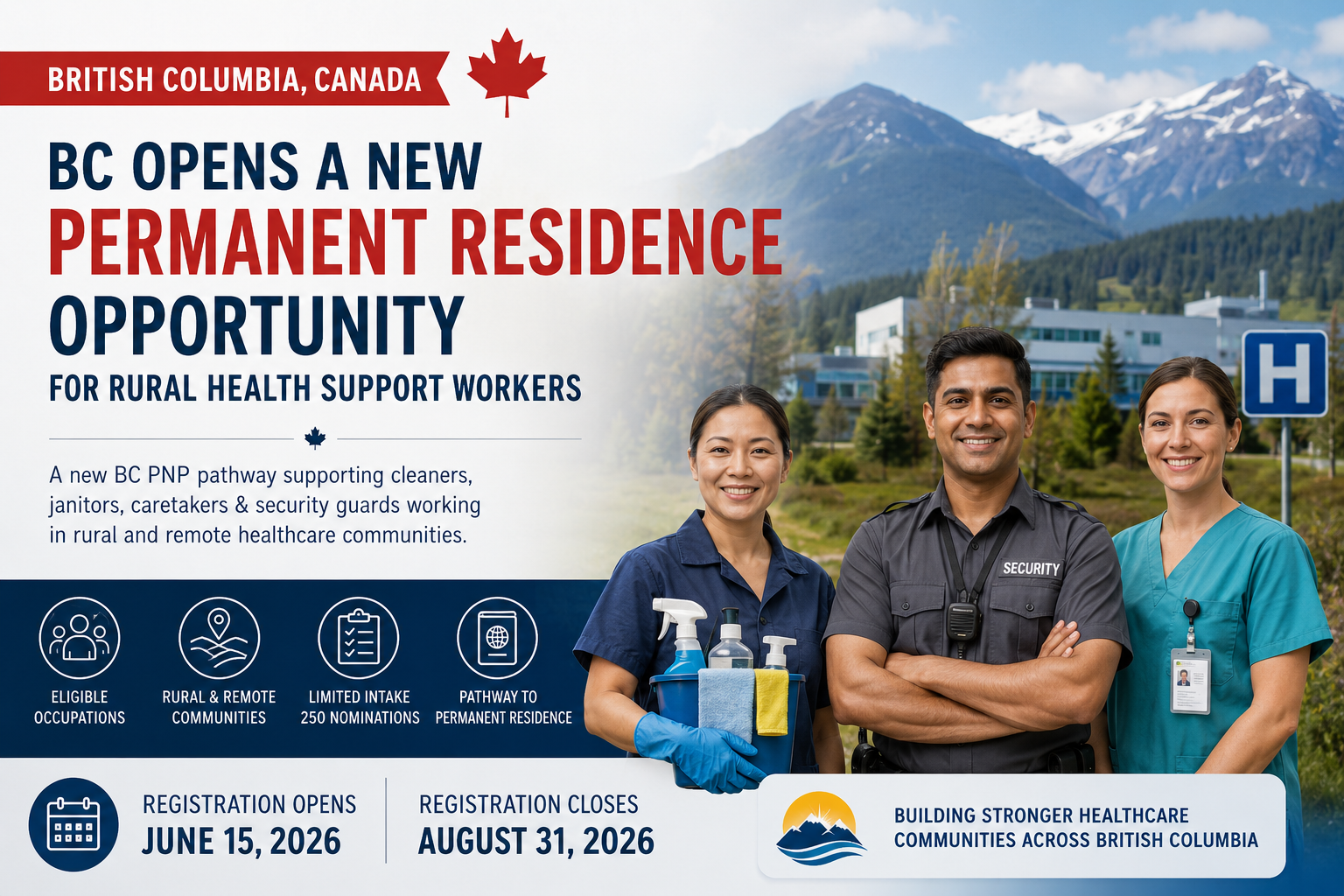
British Columbia Opens a New Permanent Residence Opportunity for Rural Health Support Workers
British Columbia has introduced a new immigration pathway that could create a valuable permanent residence opportunity for certain healthcare support workers employed in rural and remote communities across the province.
While many immigration programs focus on highly skilled professionals, this initiative recognizes the critical contribution of workers who help maintain safe, clean, and secure healthcare environments. These employees play an essential role in supporting patient care, yet they have often had limited immigration pathways available to them.
The province has announced a temporary nomination stream under the BC Provincial Nominee Program (BC PNP) that will allow a limited number of eligible workers to pursue permanent residence.
Why This Initiative Matters
Healthcare systems depend on far more than doctors and nurses. Hospitals, long-term care facilities, and community health centres rely every day on cleaning staff and security personnel to ensure facilities operate effectively and safely.
Rural and remote communities across British Columbia continue to face workforce shortages in these occupations. By creating a dedicated pathway to permanent residence, the province aims to strengthen workforce retention while providing immigration opportunities to individuals already contributing to local healthcare services.
Occupations Eligible Under the Program
The initiative is open to workers employed in one of the following occupations:
- Light-Duty Cleaners (NOC 65310)
- Janitors, Caretakers and Heavy-Duty Cleaners (NOC 65312)
Security Guards and Related Security Service Occupations (NOC 64410)
Applicants must be directly employed by an eligible British Columbia health authority and working in a qualifying rural or remote location.
Limited Intake Creates Urgency
British Columbia has indicated that the initiative is expected to support up to 250 nominations.
Registration is scheduled to open on June 15, 2026, and close on August 31, 2026.
Because the number of available nominations is limited, eligible workers should begin preparing documentation as early as possible rather than waiting until registration opens.
Key Eligibility Requirements
To be considered, applicants must satisfy several important criteria.
1. Full-Time Permanent Employment
Candidates must hold a regular, full-time, permanent position with a participating BC health authority.
The employment must remain valid throughout both the registration and application stages of the process.
2. Minimum Nine Months of Employment
Workers must have accumulated at least nine months of continuous full-time experience with the same health authority before submitting their registration.
This requirement demonstrates an established employment relationship and commitment to the community.
3. Educational Requirement
Applicants must have completed at least secondary school (high school) education.
Supporting educational documents, such as diplomas, certificates, degrees, or transcripts, will be required.
4. Income Requirements
The BC PNP requires applicants to meet minimum income thresholds based on:
- Family size;
- Location of residence within British Columbia; and
- Combined eligible household income, where applicable.
Applicants should carefully review income requirements before proceeding.
Individuals must also satisfy the standard requirements applicable to BC PNP Skills Immigration applicants, including factors related to language ability, work experience, and intention to reside in British Columbia.
Eligible Health Authority Employers
Only workers employed directly by one of the following health authorities may qualify:
- Fraser Health
- Interior Health
- Island Health
- Northern Health
- Vancouver Coastal Health
- Provincial Health Services Authority
- First Nations Health Authority
- Providence Health Care
Importantly, support from the health authority is mandatory.
Each health authority will determine its own internal process for deciding which applications it will endorse. Even if an employee meets all eligibility requirements, employer support is not guaranteed.
Who May Not Qualify?
There are several important exclusions applicants should understand.
Certain Regions Are Excluded
Workers located in the following regions are generally not eligible:
- Metro Vancouver Regional District
- Capital Regional District
- Central Okanagan Regional District
Some Gulf Islands remain eligible under specific exceptions.
Contractor Employees Are Not Included
Individuals employed through third-party contractors that provide services to health authorities are not eligible.
Only direct employees of the health authority may participate.
Certain Work Experience Does Not Count
The following employment periods cannot be counted toward the required nine months:
- Co-op or practicum placements;
- Employment obtained while holding a study permit;
- Extended leave periods exceeding two weeks.
Applicants who have taken lengthy leave may need additional work experience to satisfy eligibility requirements.
What This Means for Temporary Foreign Workers
For many workers employed in healthcare support occupations, permanent residence options have historically been limited compared to other sectors.
This new BC initiative demonstrates a growing recognition that healthcare systems rely on a wide range of occupations beyond clinical positions. Workers who contribute to maintaining healthcare facilities and ensuring public safety are increasingly being viewed as essential members of the healthcare workforce.
Eligible individuals should not assume that registration alone guarantees selection. Given the limited number of nominations available, preparation and timing will be critical.
If you believe you may qualify under this temporary BC PNP initiative, now is the time to review your eligibility, confirm employer support requirements, and gather the necessary documentation before registration opens.
Because provincial nomination programs continue to evolve, obtaining professional guidance can help identify potential concerns and improve application readiness before intake begins.
Leave a Reply