

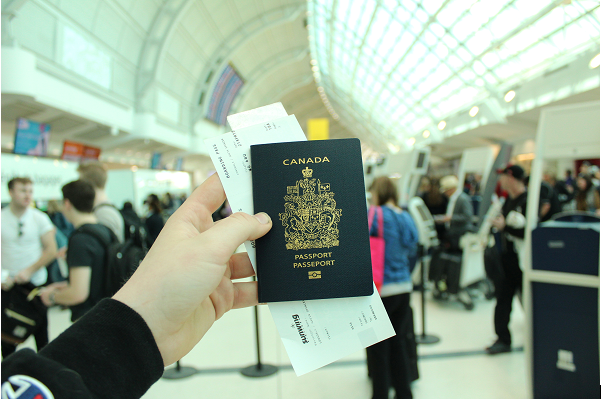
Every week, someone walks into my office or calls me with the same look on their face. A mix of hope and confusion. They’ve been in Canada for years, they’ve built a life here, and they want to make it permanent. They want to belong, officially, to this country they’ve already made their home.
And the first thing they ask me is: “Deepti, am I ready to apply for citizenship?”
That question is exactly why I’m writing this today.
Because 2026 has brought some of the most significant changes to Canadian citizenship law that I have seen in my entire career. And I want my community to be informed clearly, simply, and honestly before they make any decisions.
So let me tell you what’s changed, what it means for you, and what you should do next.
Something Big Happened in December 2025
Let me start with the news that has genuinely moved me.
For years, I worked with families who had deep Canadian roots parents who lived here, contributed here, raised families here but whose children born abroad were denied citizenship simply because of a technicality in the law. These families were not less Canadian. They just fell through a gap that never should have existed.
That gap is now closed.
A new law called Bill C-3 came into force on December 15, 2025, and it removed the so-called “first-generation limit” on citizenship. In plain language: if your Canadian parent was born or lived abroad, that no longer automatically disqualifies you from inheriting Canadian citizenship. The government has also said that people who were previously excluded under the old rules may now be automatically recognized as citizens — they simply need to apply for their proof.
I have already helped several clients begin that process. Some of them had waited years for this moment.
If you have a Canadian parent or if your parent had a Canadian parent please do not assume you are not eligible. Come and talk to me. You may be more Canadian than you think.
Are You Ready to Apply? Here Is What IRCC Looks For
For most of my clients, the path to citizenship runs through what’s called naturalization — the standard process for permanent residents who have built their lives in Canada. Here is what you need to have in place:
You must be a Permanent Resident. Your PR status needs to be valid and in good standing. No pending issues, no flags on your file.
You need 1,095 days of physical presence in Canada within the five years before you apply. That is three full years, with your feet on Canadian soil. Every trip abroad counts against you, so tracking your travel history carefully is essential. If you were in Canada as a student or worker before getting PR, those days can count too — but at half value, up to a maximum of 365 days credit.
Your taxes must be filed. You need to have filed Canadian income taxes for at least three of the five years before you apply. I cannot stress this enough — even if you earned nothing, even if you had no obligation to pay, you may still have been required to file. Missed tax years are one of the most common reasons I see applications get delayed or refused. Get this sorted before you apply.
You need to show language ability in English or French — a basic conversational level called CLB 4. If you went to school in English or French, or if you have been working in Canada, you likely already meet this. We will confirm it together.
You need to pass the citizenship knowledge test — if you are between 18 and 54 years old. I will talk about this more in a moment, because there is good news here.
And finally, the Oath of Citizenship — the moment you stand up and officially become Canadian. In my experience, this is the moment clients often call me in tears. It is everything.
The current application fee is $630 CAD for most adults, and processing generally takes between 12 and 24 months after submission.
The Citizenship Test Is Now Online – And It Is More Forgiving
I want to share something that has genuinely made my clients’ lives easier.
As of March 2026, IRCC officially confirmed that the citizenship knowledge test is now conducted online as the standard format. You do not need to travel to an IRCC office, sit in a waiting room, or rush through a paper exam.
You take it from home. You have 45 minutes. There are 20 questions. You need to answer 15 correctly to pass.
And here is the part I love telling people: you now get up to three attempts before you are referred to a formal interview. Under the old system, you had very limited chances. Now, there is room to breathe, room to learn, and room to try again.
The study material is a guide called Discover Canada, available free from IRCC. It covers Canadian history, our rights and responsibilities, how our government works, and what it means to be Canadian. I work through this with my clients and share practice questions so that by the time they sit the test, they feel ready, not nervous.
If you are under 18 or over 54, you are fully exempt from both the language and knowledge test requirements. For my senior clients especially, this simplifies the process considerably.
What About Your Children?
This is a question I get asked every single day.
If you are applying for citizenship and your children are under 18, they can often be included in your application. They do not need to take the test or prove language ability. They simply need to meet the physical presence requirement.
And here is something worth planning for now: once you become a Canadian citizen, the new Bill C-3 rules mean you may be able to pass citizenship to children born abroad in the future as long as you can show you had three years of physical presence in Canada before they were born.
Citizenship also removes a worry that many of my PR clients carry quietly: the fear of losing their status if they spend too long outside Canada. As a citizen, that fear disappears. You can travel, work abroad, care for family overseas — and come home to Canada as a full Canadian, every time.
My Honest Advice to You
I have been doing this work for a long time, and if I could sit across from every person reading this right now, I would say the same thing I say in my office:
Do not wait until you think everything is perfect. Start the conversation now.
Calculating your physical presence days takes time. Gathering your documents takes time. Fixing missing tax years takes time. The earlier we start, the smoother the process will be.
Also — and I say this with care — please do not rely on information from friends, Facebook groups, or outdated websites. Immigration rules change. What was true two years ago may not be true today. What worked for your cousin may not apply to your situation.
Your immigration journey is personal. It deserves personal attention.
Come and Talk to Me
At Doorstep Immigration, I handle every file myself. When you come to me, you are working with me not being passed around to different staff members, not getting generic advice.
I will review your situation honestly. I will tell you exactly where you stand, what is needed, and what the realistic timeline looks like. And if there is a problem in your file, I would rather find it now than after you have submitted your application.
Whether you are just beginning to think about citizenship, are already counting your days, or have a complicated situation involving family history or the new Bill C-3 changes — I am here.
Book a free consultation with me today.
Let us figure out your path together.
Deepti Gupta Licensed Immigration Consultant Doorstep Immigration | Surrey, British Columbia  info@doorstepimmigration.ca
The information in this blog is for general educational purposes only and reflects immigration rules as of May 2026. It is not legal advice. Every immigration case is unique please consult a licensed immigration professional for guidance specific to your situation.
Leave a Reply