

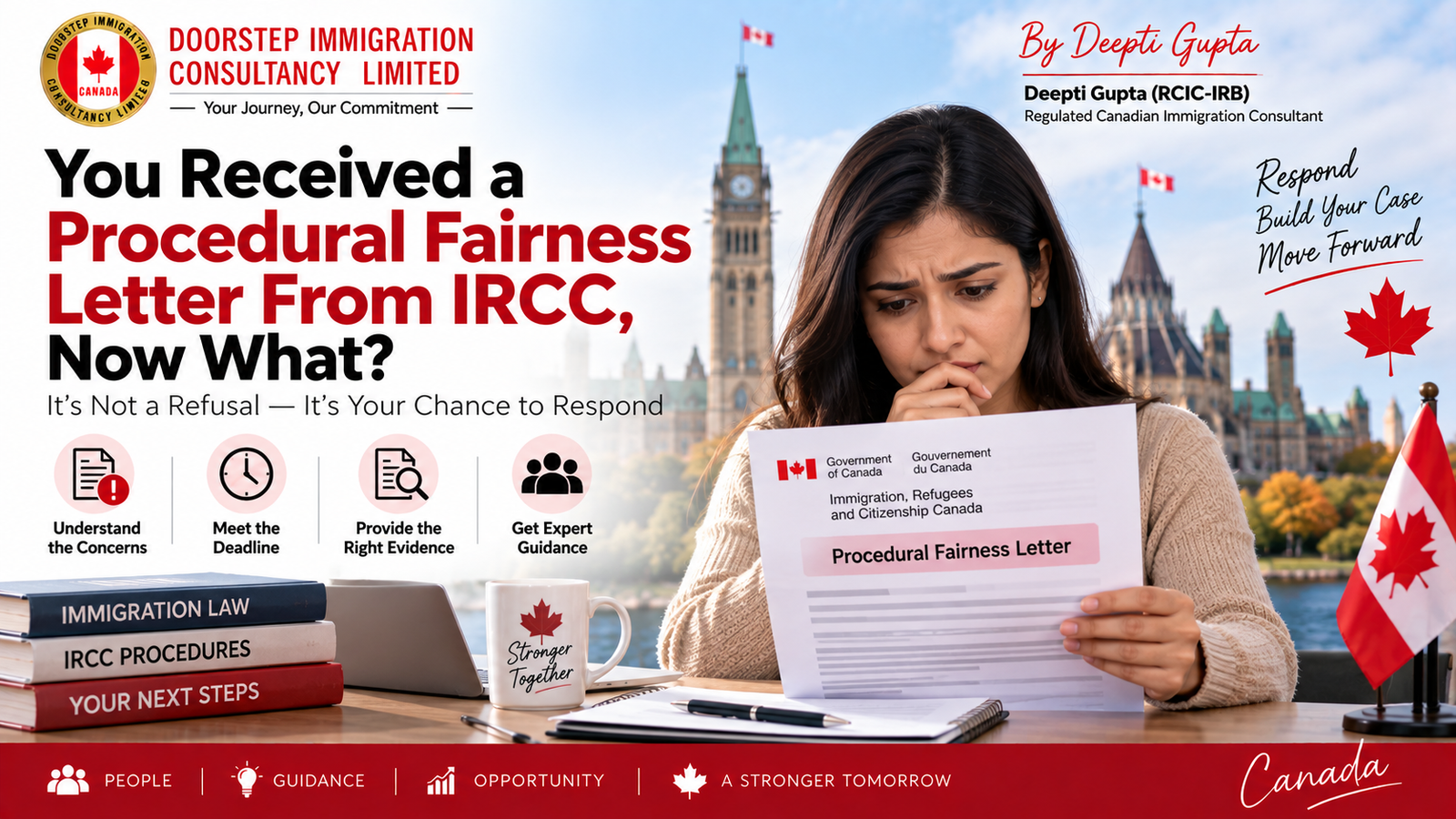
You Received a Procedural Fairness Letter From IRCC, Now What?
Of all the letters an applicant can receive from IRCC, the Procedural Fairness Letter (PFL) is the one most likely to cause panic and, in my experience, the one most likely to be responded to badly.
Here’s the thing most applicants don’t realize: a PFL is not a refusal. It’s the opposite, in a way. It’s IRCC telling you, before making a final decision, we are concerned and we’re giving you a chance to address it. How you use that chance often decides the outcome of the entire file.
What a PFL actually is
A Procedural Fairness Letter is issued when an officer has identified something in your application that raises a serious concern enough that they feel obligated, by principles of fairness, to let you respond before deciding. Common triggers I see:
Inconsistencies between documents (dates, addresses, employment details that don’t line up)
Concerns about the genuineness of a marriage or relationship
Doubts about a document’s authenticity
Gaps in an applicant’s travel or immigration history
Suspicion of misrepresentation, even unintentional
A case that shows why the response matters more than the concern
I had a client, Manpreet, whose spousal sponsorship received a PFL questioning the genuineness of the marriage. The concern was based on a discrepancy: the couple’s wedding photos showed far fewer guests than what was described in the marriage registration documents, which listed a large ceremony.
A rushed or defensive response here simply asserting “our marriage is real” would likely have failed. Instead, I helped Manpreet explain the actual context: due to family financial constraints and a death in the family shortly before the wedding, the ceremony itself was small and quiet while the marriage registration reflected the traditionally planned guest list from invitations that had already been printed before the family decided to scale down. I backed this with a signed statement from the officiant, messages between the couple discussing the change of plans and financial records showing the reduced spending. The file was approved.
The lesson: officers aren’t looking for perfection, they’re looking for a plausible, well-supported explanation for whatever caught their attention. Silence, defensiveness, or a one-line denial rarely works. Specificity does.
The mistakes that turn a fixable PFL into a refusal
Treating it like a formality. Some applicants assume a brief, generic reply will do. It won’t. Officers read these responses carefully and a thin reply often confirms the concern rather than resolving it.
Missing the deadline. PFLs come with a strict response window typically 30 days. Missing it or asking for extensions without good reason can result in a decision being made without your input at all.
Answering the wrong question. I often see people over-explain unrelated parts of their history instead of directly addressing the specific concern raised. A PFL response needs to be surgical, identify exactly what was flagged and answer that with evidence.
Introducing new inconsistencies. In the rush to respond, applicants sometimes provide new information that contradicts something submitted earlier. This can turn one concern into two.
Why this needs experienced handling
A PFL is, in effect, IRCC handing you one chance to save your file before making a final decision. That chance is easy to waste if you don’t know exactly what the officer is really asking, or if the response isn’t built with the right supporting evidence and tone confident but not defensive, thorough but not scattered.
At Doorstep Immigration, I treat every PFL as what it is: the most important document in the entire application process. I review the specific wording of the letter, identify precisely what’s being questioned, and build a response with the evidence and explanation needed to resolve it not just acknowledge it. If you’ve received a PFL, don’t respond to it alone. Talk to me first.
Doorstep Immigration, Surrey Office #236, 8138, 128 Street, Payal Business Centre, Surrey, BC, V3W 1R1, Canada 📧 dscanada18@gmail.com
📞 +1 778 228 3109 | +1 604 200 2999
Leave a Reply